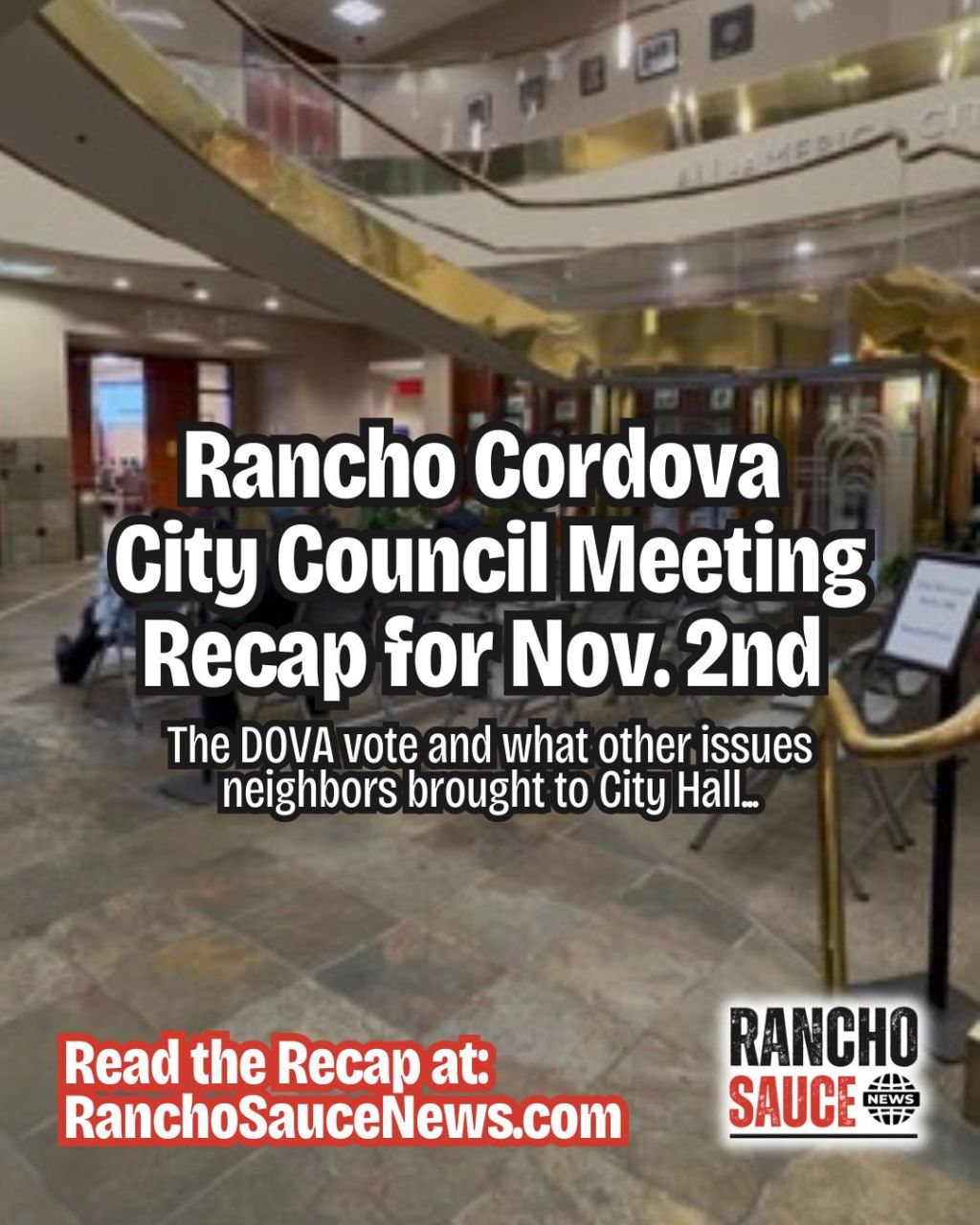
RANCHO CORDOVA, Calif., Nov. 2, 2026 — The City Council approved four measures to move the Cordova Arena and Downtown DOVA forward, including a deal that caps the city’s financial support at $185 million over time. Each measure passed 4–1, with Councilmember Joe Little voting no each time. Abridged’s coverage of the vote
To everyone who signed the petition, sent in comments, or has been waiting for an update from me, I’m sorry it took this long. The past few weeks at City Hall wore me down a bit. I’m catching up now, and I want to make sure the neighbors who came to talk about something besides DOVA get heard, too…
What the council approved
At the Oct. 26 special meeting, the council approved the arena design and a deal to sell city-owned land to the developer. On Nov. 2, it adopted the development agreement, approved the financial deal, updated an earlier agreement, and determined that no further environmental review was required under the provision it applied. The project still has to go through financing, permitting, and construction. Watch the Oct. 26 meeting
What does $185 million actually mean? Basically, it’s a ceiling. How much the city ultimately provides depends largely on what gets built and how much tax revenue it brings in. Most of the support would come from sharing future taxes generated by the project, including hotel and sales taxes. The deal also lets the city waive certain permit fees, cover up to $13.5 million in fees that help pay for public infrastructure, and cover some police and fire costs if the developer meets certain milestones. So when you hear that construction is privately financed, there’s another piece to the story. The city agreed to put public resources into the deal, including General Fund money for the infrastructure fees. Abridged’s breakdown of the agreement
The council also changed parts of the agreement that night. One change ties hotel tax sharing to the arena getting its certificate of occupancy. Another gives the city a way to suspend support if the arena stops meeting its operating requirements. Those details matter when residents ask what happens if the project doesn’t turn out as promised. Rancho Cordova Independent’s coverage of the changes
Where that leaves our petition
We asked the city to slow down long enough for neighbors to understand what we’d be paying for, what we’d get in return, and what happens if parts of DOVA never get built. More details made it onto the public record, and I’m glad we have them. The council also voted the same night it made changes to the deal. I’m calling that progress. There are still questions to answer about the agreement and how much time residents had to make sense of it. Read the petition
The room felt less hostile than it did at the September meetings, though it felt rude at times. I watched some people with the development team and some of their supporters squint and scoff at neighbors while they spoke. And from where I sat, it felt like asking a hard question was still just enough to get you treated like “the opposition.”
Some of us were still making up our minds. Some were excited to have an arena here, then started reading the deal and had real concerns. I’d also been reading about how DOVA project lead Joshua Wood and his allies dealt with the people gathering signatures for a public vote on Sacramento’s arena subsidy. That history was on my mind in that room. You should be able to ask what a deal will cost your city without everybody deciding what “side” you’re on. Our earlier reporting on the Sacramento arena fight
Can we still ask questions?
The hearing on those approvals is over. You can still bring DOVA concerns to the council during general public comment. City public meetings portal
The development team also runs its own public Zoom, the DOVA Civic Collective, listed for the last Wednesday of each month at 11 a.m. Pacific. The team takes questions in advance and says it may answer selected questions live or in a follow-up. Developer’s Zoom schedule and question form
What neighbors brought up before the DOVA hearing…
General public comment is where you can bring up a concern the city can address, even if it isn’t on the agenda. Hearing what neighbors bring to that mic is one of the reasons I started showing up and reporting on these meetings.
Helen was there with questions about Mills Crossing. If a future developer needs to move infrastructure taxpayers already paid to put in, who pays to redo it? She also brought up a parking structure she said residents had been promised. I’ve heard Helen raise Mills Crossing before, and I’m still looking for clear answers. Watch Helen’s comments
Darryl questioned the timeline of a story Mayor Garrett Gatewood told on Oct. 26. Darryl understood Gatewood to be describing a conversation that happened after he joined the council. He pointed out that the councilmember in the story had already died by then and that Gatewood had been appointed to fill his seat. Watch Darryl’s comments
Ruth asked the city to pause enforcement of driveway notices. She said neighbors received “courtesy notices” giving them 10 days to make corrections, even though some of the driveways had been there for more than a decade. She said she was quoted $10,000 for a formal hearing to seek an exception. She asked the city to pause enforcement and give neighbors a way to make their case without each household having to pay that fee. Watch Ruth’s comments
When I spoke with Ruth, she told me the city asked her to gather at least 12 signatures from neighbors and said it would meet with her to talk through what could be done. I don’t have an update from her yet. Before adjournment, the city said it would bring the paving rules back for a policy discussion. Watch the city’s response
Rancho Cordova uses an AI tool called City Detect to flag possible code violations. The city says a code officer reviews the photos. I haven’t confirmed whether the tool flagged these driveways or increased the number of notices citywide. I want to find out what happens when a letter with a deadline is the first a homeowner hears about a problem, and how they can get an explanation or challenge the notice. Read the city’s explanation of City Detect
What neighbors said during the DOVA hearing
During the Nov. 2 DOVA hearing, plenty of people spoke in support of the arena, including workers who talked about the jobs it could bring. Other neighbors still had questions about public money and traffic. The project drew a crowd again. I saw families, friends, labor workers, and kids in the room, and the city had a better setup for overflow seating this time. Election Day was the next day, so it was already a busy week at City Hall. Watch the DOVA hearing public comments
From where I sat, Nov. 2 felt much less hostile than Oct. 26, when DOVA supporters rallied in the parking lot before the meeting. The Sept. 30 Planning Commission meeting was even louder. There was a rally before that one, too, and the cheering carried into the chambers. At that meeting the room had to be told to stop cheering after some people who opposed the project started also booing in protest to cheers being allowed. (I’ll get into that in a separate recap. Sorry these are coming out a little out of order, neighbors. The negativity wore me out for a minute. 😅)
One resident I’d like to highlight; Jeffrey brought a handwritten petition with 62 names from district 2 residents. He told the council he was neutral on DOVA and had lived in Rancho Cordova for 44 years. Drivers already cut through his neighborhood to bypass Sunrise Boulevard, he said, and he didn’t think the roads could handle more traffic. He also objected to using the city’s General Fund to cover development fees. Then he held up the petition for the mayor. He’d gathered names while out trick-or-treating. Watch Jeffrey’s comments
What else happened
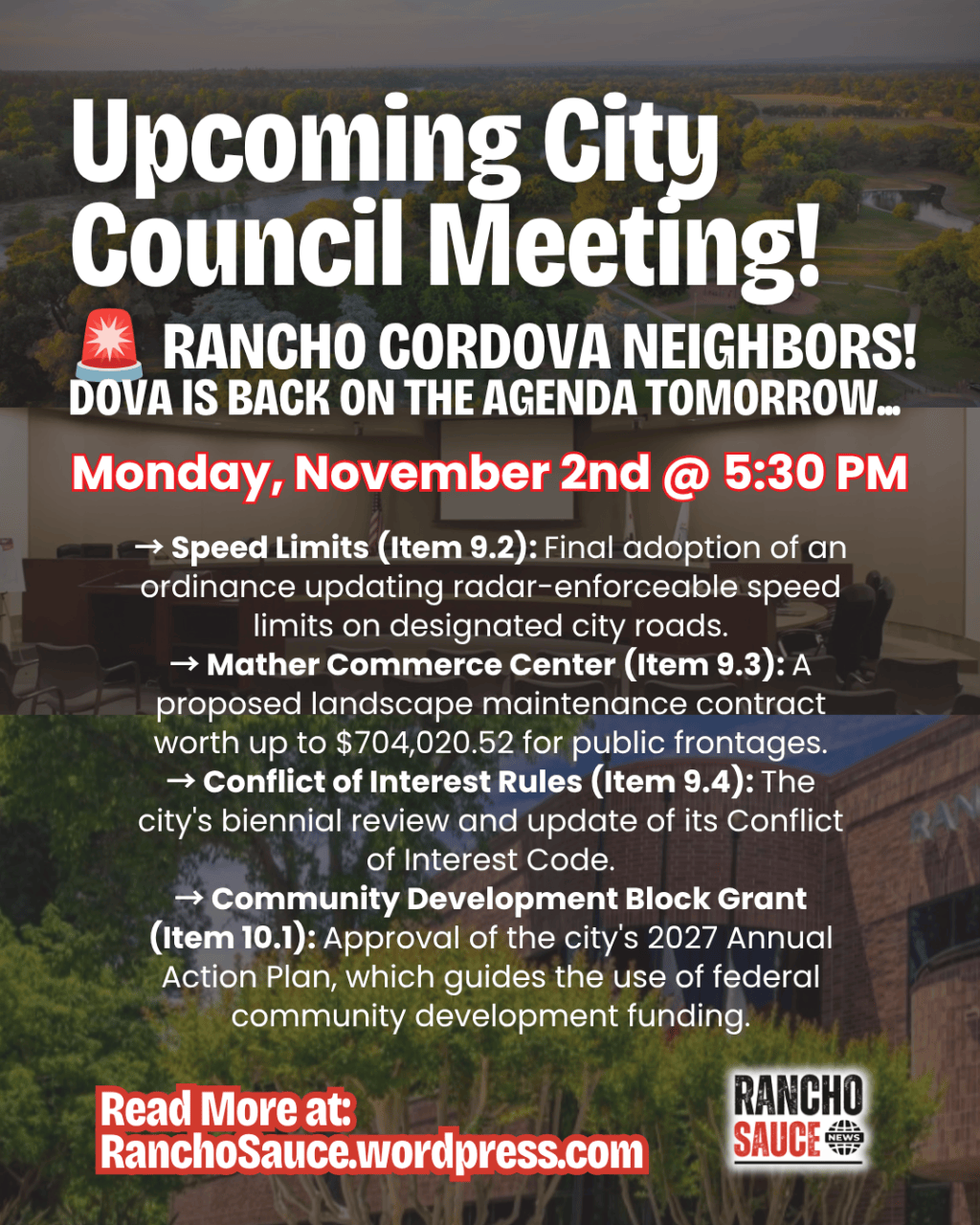
The council recognized Diann Rogers for 15 years with the Rancho Cordova Area Chamber. It also approved speed-limit updates on several roads, a landscaping contract of up to about $704,000 for public areas along streets in the Mather Commerce Center, an update to the city’s conflict-of-interest code, and its 2027 plan for federal Community Development Block Grant funds. Find out more in the city meeting records
Editor’s note: This recap draws on my notes from attending in person, the meeting transcript, the Nov. 2 agenda packet, published reporting, and my conversation with residents. AI assisted with drafting.


Leave a Reply